

RIR RIP RUR.
|
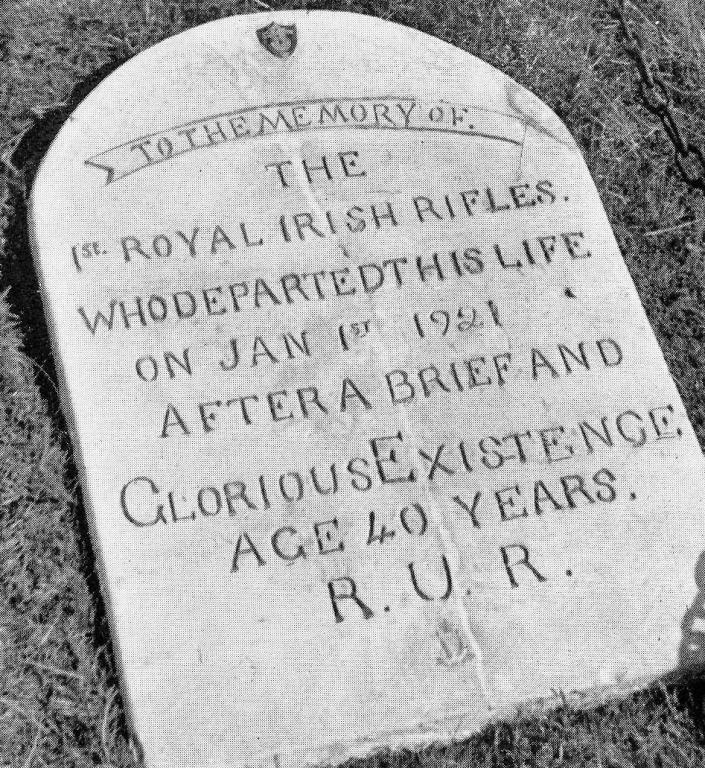
| RIR Headstone |
Set against the background of a changing political situation in Ireland, the War Office took the decision to retitle The Royal Irish Rifles and create a provincial regiment for Ulster as already enjoyed by Munster, Leinster and Connaught. The Regiment's title was changed to The Royal Ulster Rifles. Naturally, this caused much despondency at first, but gradually was accepted.
An amusing ceremony took place on New Year's Day, 1921. An invitation to witness 'an important ceremonial parade' was issued. Spectators watched as a funeral procession, in which the whole Battalion took part, was led by the Regimental Band playing Chopin's Funeral March. Behind the band walked two 'chaplains', wearing dark glasses, top hats and surplices fashioned from tablecloths with hands clasped over a book and heads bowed. Behind them came a small coffin, draped in a Union Flag, carried by a bearer party of NCOs. Next, at the slow march,came a firing party carrying their rifles with 'arms reversed'. The cortege made its way to the sports field behind the Battalion Orderly Room where it came to a halt alongside a freshly dug grave. The Battalion was burying its old regimental name and its 'ashes' were enclosed in the orange 'coffin'! One of the two 'padres' recited the committal rite declaring:
For as much as it has pleased the almighty War House of its great wisdom to take upon itself the name of our dear regiment here departed, we therefore commit its ashes to the grave without the slightest hope of resurrection.
The orange 'coffin' was then lowered into the grave but unfortunately the rain had filled the grave with water and a senior Warrant Officer then tried to push it below the water with a shove of his foot. He lost his balance and fell over into the grave to roars of laughter whereupon the dripping Sergeant Major yelled '...The Irish Rifles will never die' as he climbed from the grave. 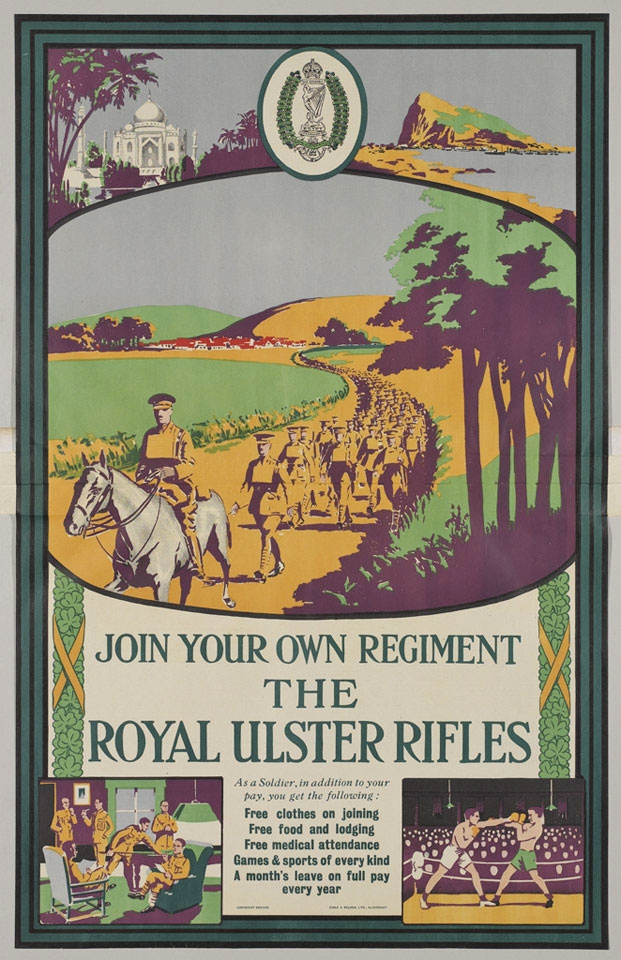 Three volleys were fired and the Last Post sounded. Shovelfuls of earth were put on the coffin and a tin helmet hung on a wooden cross. Everyone gave three loud cheers for the Old and three for the New Regiment to conclude the extraordinary proceedings. A headstone was raised with the inscription:
TO THE MEMORY OF
THE 1st ROYAL IRISH RIFLES.
WHO DEPARTED THIS LIFE
ON JAN 1st 1921
AFTER A BRIEF AND
GLORIOUS EXISTENCE
AGE 40 YEARS
RUR
It is believed that the original inscription on the wooden cross included:
R.I.R., R.I.P., R.U.R
Later, a permanent gravestone was erected and the grave can still be visited on the Isle of Wight at the former site of Albany Barracks.