


86th Regiment - Storming of Baroach, India
|
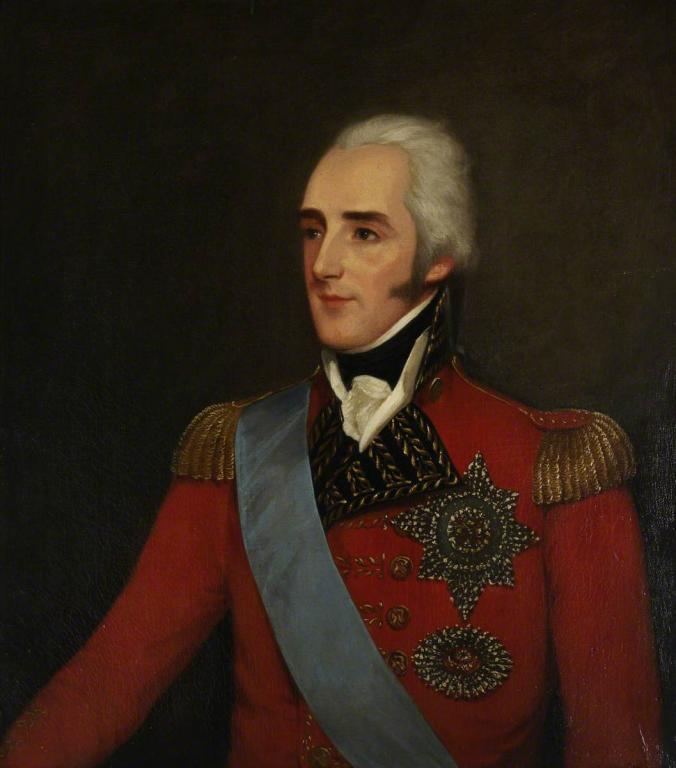
| Earl of Mornington, Richard Wellesley, circa 1803 |
The Hindu Mahratta confederacy, the remnants of the Maratha Empire, opposed the British in India and was a major threat to the East India Company’s territorial ambitions. Major General the Honourable Arthur Wellesley commanded the troops in southern and eastern India in opposition to the Mahrattas from the south.
The 86th Regiment were at Baroda and operated north of the River Nerbudda (now in Madhya Pradesh) with a force of 20 officers and 600 rank and file. Wellesley ordered a Bombay Infantry officer, Lieutenant Colonel Waddington, to lead a force to seize the fort at Baroach. The force included 500 of the 86th commanded by Major Cuyler.
The fortress was reached on 23 August and a short siege began. Two days later, after a short skirmish, the enemy was forced into the fort that stood on an elevation some 180 feet above the surrounding area, with 18-foot high and 12-foot thick walls, surmounted by a loop-holed parapet that added a further 6 feet to its height. It was also surrounded by a ditch knee-deep in mud.
By the 29 August, a breach had been achieved and Waddington issued orders for the assault to begin at 1500 hours. There were two storming parties, each equipped with hoes, pick-axes, crowbars and ladders, and a reserve group carrying additional ammunition. On firing two 6-pounder guns as a signal, the storming parties assaulted. Captain Richardson, leading the first party, turned left to seize the Cutterpore Gate and the second party, led by the overall commander, Major Cuyler, turned right to seize the Jarrasar Gate.
The Governor-General of Bengal*, the Earl of Mornington, was Richard Wellesley, whose younger brother was Major General Arthur Wellesley, later to become the Duke of Wellington. An Order from the Governor-General's office stated:
‘The Governor-General in Council signifies his particular approbation of the valour and judgment manifested by Major Cuyler, of His Majesty’s 86th Regiment throughout the services in Baroach and in commanding the storm of the fort, and by Captain J. Richardson, in leading the assault … [and] laments the loss of Captain Semple … and the brave men who fell at Baroach.’
The 86th Regiment’s losses as a result of actions at Baroach were six killed and seventeen wounded.
*
From 1828 this appointment was retitled Governor General of India and in 1854 a separate post of Lieutenant Governor of Bengal was created. After India's independence and partition, East Bengal was created, becoming East Pakistan in 1956 and then, declaring independence from Pakistan in 1971, became Bangladesh.